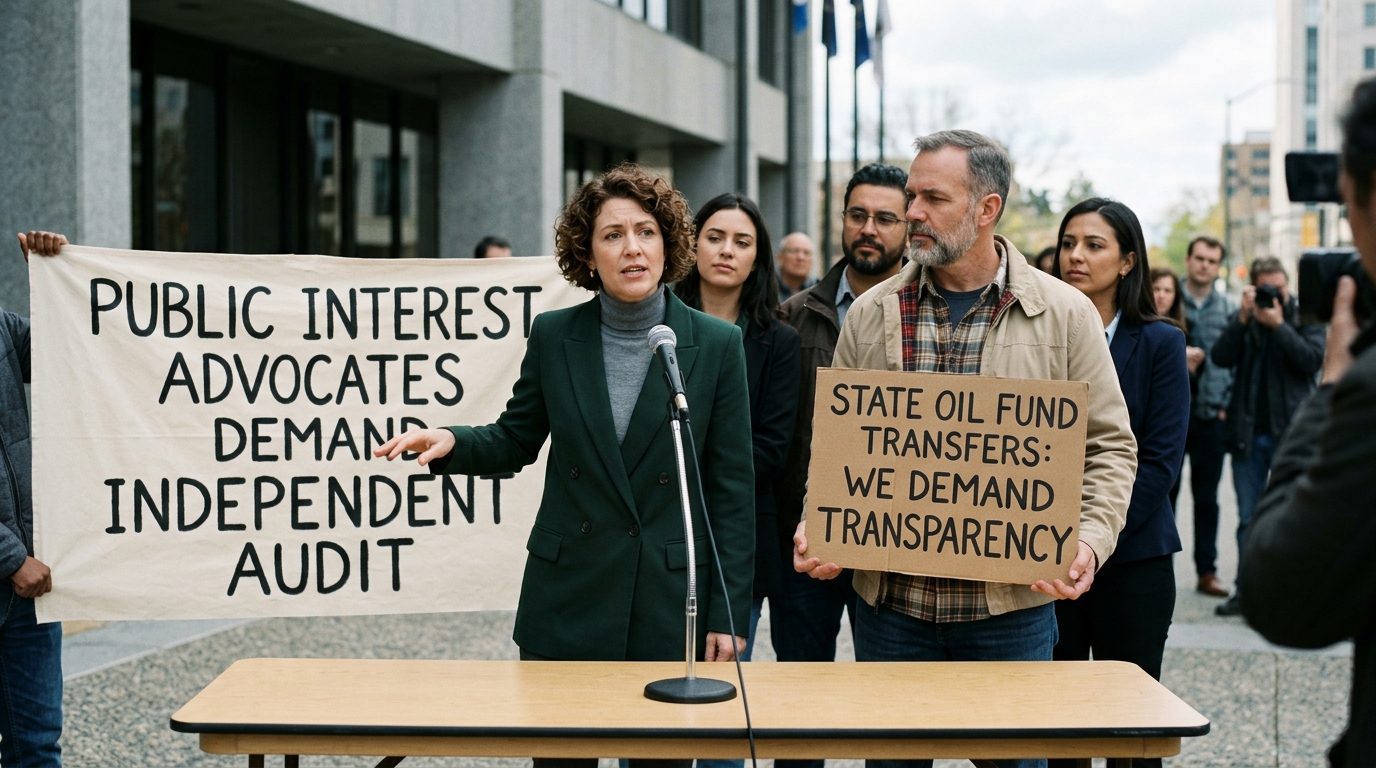
Public Interest Advocates Demand Comprehensive Independent Financial Audit Following Misappropriation Allegations in State Oil Fund Transfers
Follow the Money: Inside the Battle for a Full Independent Audit of State Oil Fund Transfers
When billions of dollars in national oil revenues vanish into a complex maze of inter-account transfers, shell entities, and unvouched expenditures, the stability of an entire sovereign economy hangs in the balance.
Across major energy-producing nations, public interest advocates, civil society coalitions, and governance watchdogs are demanding a forensic, ground-up audit of state oil fund remittances. Following a series of regulatory filings, official audit observations, and court challenges regarding alleged multi-billion-currency discrepancies—spanning domestic fiat, U.S. dollars, British pounds, and euros—citizens are no longer satisfied with internal reviews or political assurances.
The core demand is uncompromising: an independent, internationally benchmarked financial audit led by external forensic accounting authorities, equipped with full subpoena power to trace every barrel produced to every dollar deposited in the central treasury.
With state governments, human rights organizations, and international governance monitors demanding full transparency, the global energy sector faces a watershed moment. If state-owned oil entities cannot provide auditable paper trails for billions in crude-for-loan swaps and direct revenue transfers, the resulting loss of public trust could dismantle existing fiscal frameworks.
To understand the scale of the demands made by public advocacy groups—including organizations like the Socio-Economic Rights and Accountability Project (SERAP)—one must examine the documented financial discrepancies and structural mechanisms governing state oil account transfers.
The Anatomy of the Audit Queries
Official reports issued by public audit bodies and governance watchdogs highlight systemic gaps in how petroleum proceeds move from state oil enterprises to the central bank:
- Unvouched Service Payments: Official audit findings revealed over ₦3 billion paid out for various corporate services without supporting documentary evidence, legal contracts, or verifiable deliverable receipts. Serap Nigeria
- Uncollected Statutory Taxes: Reports indicate that state oil entities routinely failed to deduct statutory withholding taxes and value-added tax (VAT) running into hundreds of millions of Naira and hundreds of thousands of U.S. dollars from payments made to third-party consultants and contractors.
- Irregular Charter & Maintenance Contracts: Multi-million dollar and Euro-denominated payments—including over €5.1 million for jet facility operations and $1.8 million for coastal vessel charters—were executed prior to contract ratification or paid to entities lacking power of attorney.
- Operating Surplus Non-Remittance: Audits uncovered instances where state oil companies failed to remit billions in operating surpluses (such as a single ₦12.7 billion balance) into general reserve funds.
The Crude-for-Loan Swap Complexity
Compounding these unvouched operational expenses is the massive growth of crude-for-loan arrangements. Under these forward-sale agreements, state petroleum entities pledge future crude oil production directly to international lenders or commodity traders to service bilateral loans.
Because these transactions occur before crude sales hit public accounts, up to one out of every seven barrels produced is diverted to service off-budget debt obligations without standard parliamentary oversight or public treasury entry. State sub-national governments argue that this structure starves local healthcare, education, and infrastructure budgets of statutory allocations.
As legal petitions advance through national courts and public advocacy campaigns gain traction, the governance of public petroleum funds stands at a crossroad. Industry analysts, sovereign debt strategists, and international transparency advocates are projecting three primary potential scenarios.
Scenario A: Mandatory Independent Forensic Audit & Structural Reform (Trend-Driven Probability)
Industry analysts are watching to see if escalating pressure from civil society coalitions, state-level governments, and international multilateral lenders forces the executive branch to commission a independent forensic audit.
One potential scenario is that an international consortium of top-tier accounting firms, working alongside independent anti-corruption monitors, will be granted unrestricted digital access to state oil company ledgers, joint-venture Escrow accounts, and crude vessel tracking data. Market sentiment suggests that if this audit yields verifiable recovery of unremitted funds and leads to automated, real-time public dashboards tracking crude liftings, sovereign credit ratings and investor confidence could improve significantly.
Scenario B: Prolonged Litigation and Fiscal Paralysis (Worst-Case Outlook)
While unproven, some political economy strategists speculate that state oil enterprises and government agencies may mount extended legal defenses, invoking corporate confidentiality clauses and jurisdictional challenges to delay public disclosures.
Governance observers hypothesize that if legal battles drag on while crude-backed debt obligations continue to siphon off primary revenues, sub-national governments could face severe budget shortfalls. In this scenario, analysts predict that sovereign borrowing costs could escalate, domestic inflation could rise as central banks monetize deficits, and public distrust in state institutions could trigger widespread economic friction.
Scenario C: Transition to Smart-Contract Blockchain Settlement (Best-Case Probability)
A scenario widely discussed among financial technology researchers and energy economists is the total modernization of national oil revenue accounting through cryptographic ledger integration.
Market commentators theorize that to permanently eliminate manual accounting queries, unvouched transfers, and delayed remittances, state petroleum entities could adopt smart-contract infrastructure. Under this automated model, every barrel of crude delivered to a tanker triggers an immutable digital receipt, with sale proceeds instantly and programmatically split between operational costs, debt service, and the central treasury according to statutory formulas—leaving zero room for unauthorized discretionary diversions.
The push for an independent, uncompromised financial audit of state oil fund transfers is more than a dispute over accounting discrepancies—it is a struggle for fiscal sovereignty and democratic accountability. When national energy resources fail to translate into public infrastructure, economic stability, and human development, the underlying revenue architecture must be opened to public scrutiny.
As judicial decisions, parliamentary inquiries, and independent advocacy actions progress, citizens, institutional investors, and governance analysts should watch four critical variables:
- Audit Scope & Independence Mandates: Monitor whether any newly commissioned audit is truly independent, backed by legal subpoena power, and led by external firms with zero ties to political leadership.
- Crude-for-Loan Transparency Disclosures: Track whether state oil companies release full, unredacted contracts regarding off-budget forward-sale deals and crude collateralization ratios.
- Automated Reconciliation Adoption: Watch whether state treasury departments implement real-time, public-facing digital tracking systems for wellhead-to-treasury oil flow data.
- Sub-National Revenue Distribution Outcomes: Assess whether legal challenges by state governments result in direct treasury remittances and the recovery of missing or unvouched balances.
Resource wealth belongs to the public. Restoring trust in sovereign financial management requires opening the ledger, verifying the entries, and ensuring that every drop of oil accounts for every cent in the public treasury.
Editorial & Risk Disclaimer: This article is written strictly for educational, informational, and analytical purposes. It does not constitute legal, tax, financial, or investment advice. The financial data, audit queries, and speculative scenarios cited reflect editorial research of public court filings, official audit statements, and civil society petitions. Readers should consult qualified legal counsel and financial compliance professionals before drawing legal conclusions or making corporate investment decisions.
To better understand how state governments are legally challenging opaque crude-backed borrowing deals and demanding forensic reviews of state oil company operations, watch this detailed news coverage on States Demand Forensic Audit of NNPC's Crude-for-Loan Deals!. This report explains the financial impact of off-budget crude allocations on regional public finances. YouTube