Category: Global politics || Posted Aug 06, 2026
The Toll of Turmoil Why the Global Shipping Industry is Drawing a Hard Line in the Strait of Hormuz
Imagine standing at the edge of the world’s most vital economic artery, where a single stretch of water handles nearly twenty percent of all globally consumed petroleum. Now, imagine a checkpoint—a multi-million-dollar maritime gatekeeper charging a tax just to keep the lights on in half the world.
This is no longer a dystopian fiction. As regional conflicts simmer and backroom diplomatic deals take shape to reopen the blockaded Strait of Hormuz, a terrifying new precedent is threatening to anchor itself into international trade: the weaponization of maritime transit through tolls.
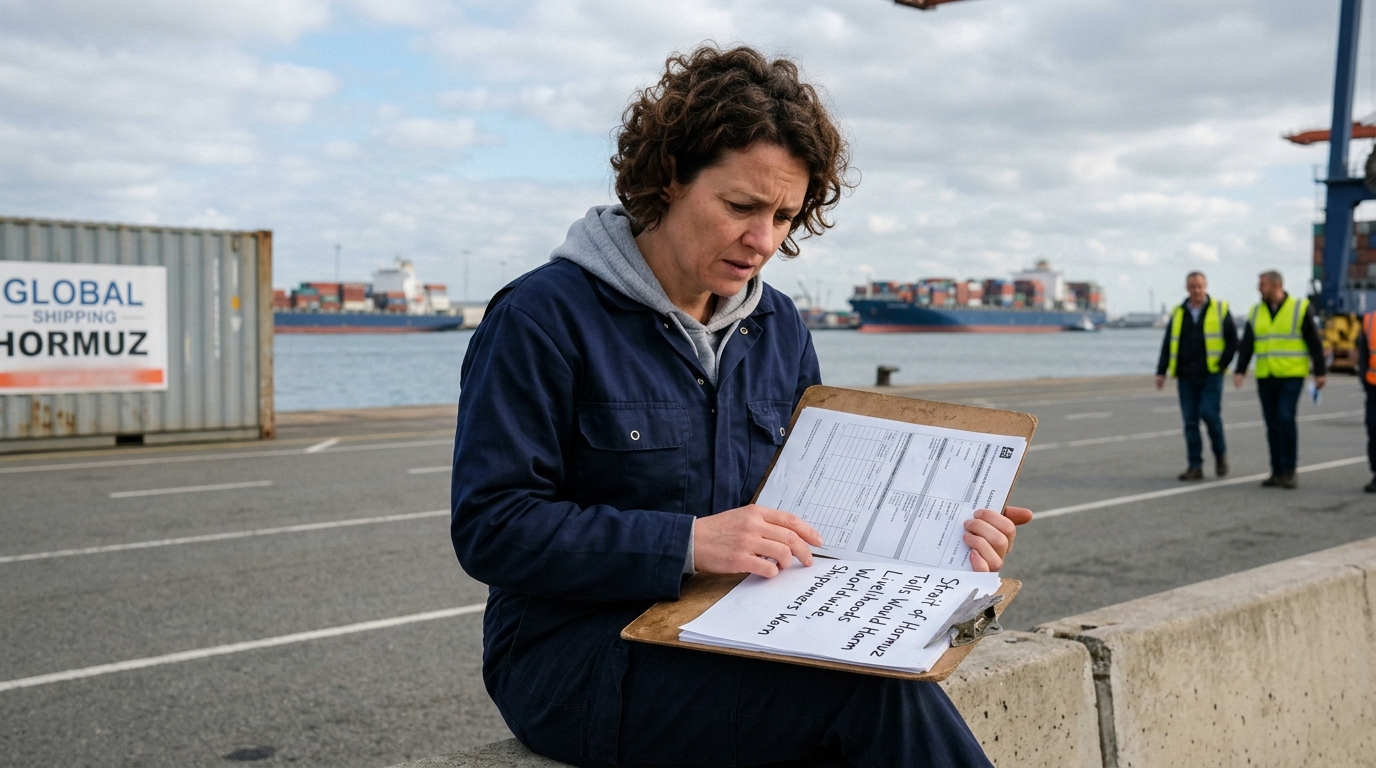
In an unprecedented, unified display of alarm, eight of the world’s most powerful maritime associations have officially sounded the alarm, firing off a joint open letter to the United Nations and the International Maritime Organization (IMO). Their message is stark and unyielding: allowing compulsory transit charges or service fees disguised as tolls in international straits will break international law, inflate global energy prices, and directly penalize working-class livelihoods worldwide.
The battle for the future of global shipping has begun. Let’s investigate the facts, the legal fault lines, and the high-stakes future of the world’s most crucial maritime chokepoint.
The Anatomy of the "Tehran Toll Booth" Crisis
To grasp why the global shipping industry is standing its ground, we must examine the factual reality of what has transpired in the Persian Gulf over recent months.
The Breakdown of Transit Freedom
Following military escalations earlier in the year—specifically following U.S. and Israeli strikes on Iran—Tehran significantly restricted navigation through its territorial waters in the Strait of Hormuz. In place of open international transit, a de facto regulatory apparatus took shape. Under the management of localized frameworks such as the Persian Gulf Strait Authority, commercial vessels were forced to seek explicit Iranian approval, navigate tightly controlled corridors, and, in many instances, comply with hefty financial extractions.
Intelligence reports and maritime analysts noted that these charges—often operationalized through insurance mechanisms like "Hormuz Safe" or direct bilateral arrangements—have seen individual ship transit costs soar, with private deals scaling into the hundreds of thousands of dollars per voyage.
The Global Shipping Coalition Strikes Back
Faced with the prospect of these temporary wartime measures becoming permanent fixtures of international commerce, eight premier shipping bodies drew a definitive line in the sand.
Dated August 3, 2026, and addressed directly to UN Secretary-General António Guterres and IMO Secretary-General Arsenio Dominguez, the joint open letter was signed by:
- The Asian Shipowners' Association (ASA)
- BIMCO
- Cruise Lines International Association (CLIA)
- European Community Shipowners' Associations (ECSA)
- International Chamber of Shipping (ICS)
- INTERCARGO
- INTERTANKO
- World Shipping Council (WSC)
The coalition’s argument is legally and economically grounded. Under the United Nations Convention on the Law of the Sea (UNCLOS), straits used for international navigation are governed by the principle of transit passage—meaning ships possess the right of continuous and expeditious movement through international waterways without being subject to arbitrary taxation or obstruction.
Furthermore, IMO Secretary-General Arsenio Dominguez previously reinforced this stance, stating clearly that no current mechanism within international law permits nations to levy fees on ships wishing to cross international straits.
Speculative Scenarios and What's Next?
As diplomats deliberate behind closed doors—particularly concerning Omani-mediated frameworks to manage traffic in the wake of the recent crisis—industry strategists are closely watching how this standoff resolves.
While exact outcomes remain fluid, market analysts and shipping insiders have outlined three primary trajectories for how the "Hormuz Toll" debate could unfold over the coming months:
Scenario 1: The Total Legal Rebuff (The Best-Case Baseline)
- The Scenario: Backed by the UN, the IMO, and unified pressure from global superpowers (including rare points of alignment between Western nations and major Asian economies), any formal attempt to institutionalize permanent transit tolls is completely scrapped from current peace and reopening negotiations.
- Market Sentiment & Probabilities: Shipping analysts suggest this outcome would instantly remove a major structural risk premium from charter rates and global commodity futures.
- Probability: Moderate to High, given that major energy-importing economies (such as China, India, and European states) have an intense national interest in keeping transit costs through Hormuz unencumbered.
Scenario 2: The "Service Fee" Loophole (The Trend-Driven Compromise)
- The Scenario: To save face politically and fund necessary post-conflict navigation aids, environmental monitoring, and port safety infrastructure, negotiators agree to a sanitized workaround—framing fees not as "tolls," but as voluntary or mandated safety and navigational service fees modeled loosely after other regional systems.
- Market Sentiment & Probabilities: While technically distinct from sovereign tolls, shipowners argue this still crosses a dangerous red line. The market fears a "domino effect," where other strategic choke points worldwide begin adopting similar fee models, driving up cumulative baseline logistics costs.
- Probability: Moderate, as a pragmatic concession to appease regional actors controlling the physical coastline.
Scenario 3: Bypasses and Chronic Maritime Fragmentation (The Worst-Case Friction)
- The Scenario: Negotiations collapse over financial demands, leading to prolonged uncertainty, fragmented regional security zones, and a permanent increase in war-risk insurance premiums. Shippers increasingly bypass the Persian Gulf entirely, relying on alternative pipelines and long-haul routes.
- Market Sentiment & Probabilities: Global supply chains absorb chronic inflationary shocks. Energy importing nations face structurally higher baseline costs, filtering down directly to manufacturing, agriculture, and retail consumer prices.
- Probability: Low to Moderate, dependent entirely on the fragility of broader political accords in the Middle East.
The debate over Strait of Hormuz tolls is far more than an obscure maritime dispute; it is a stress test for the entire architecture of international trade. When the freedom of the seas can be leveraged for cash, the economic shockwaves ripple past corporate boardrooms and directly into the cost of food, fuel, and manufactured goods across the globe.
As this critical situation evolves, observers, economists, and industry stakeholders should monitor three key developments:
- IMO and UN Formal Responses: Watch for whether the UN Security Council or the IMO assembly issues formal binding declarations or protective resolutions regarding transit passage rights.
- Implementation Text of Regional Accords: Scrutinize the fine print of any finalized Oman-mediated management agreements to see if financial mechanisms or vessel fees are embedded under alternative administrative names.
- Global Insurance and Freight Indexes: Track war-risk surcharge adjustments by major marine underwriters (such as Lloyd's market syndicates) to gauge immediate commercial confidence.
The freedom of navigation has kept the global economy moving for over a century. Protecting that framework remains essential to keeping the world afloat.