Category: Global politics || Posted Aug 04, 2026
Minister Anand to travel to Benin and Côte d'Ivoire to strengthen Canada's diplomatic engagement in West Africa
As geopolitical fault lines shift and global supply chains fracture under the weight of resource competition and security crises, middle powers are quietly redrawing their diplomatic maps. For Canada, a nation whose prosperity has long been tied to traditional Atlantic corridors, the future of its foreign policy is increasingly being written in the vibrant, fast-growing markets of West Africa.
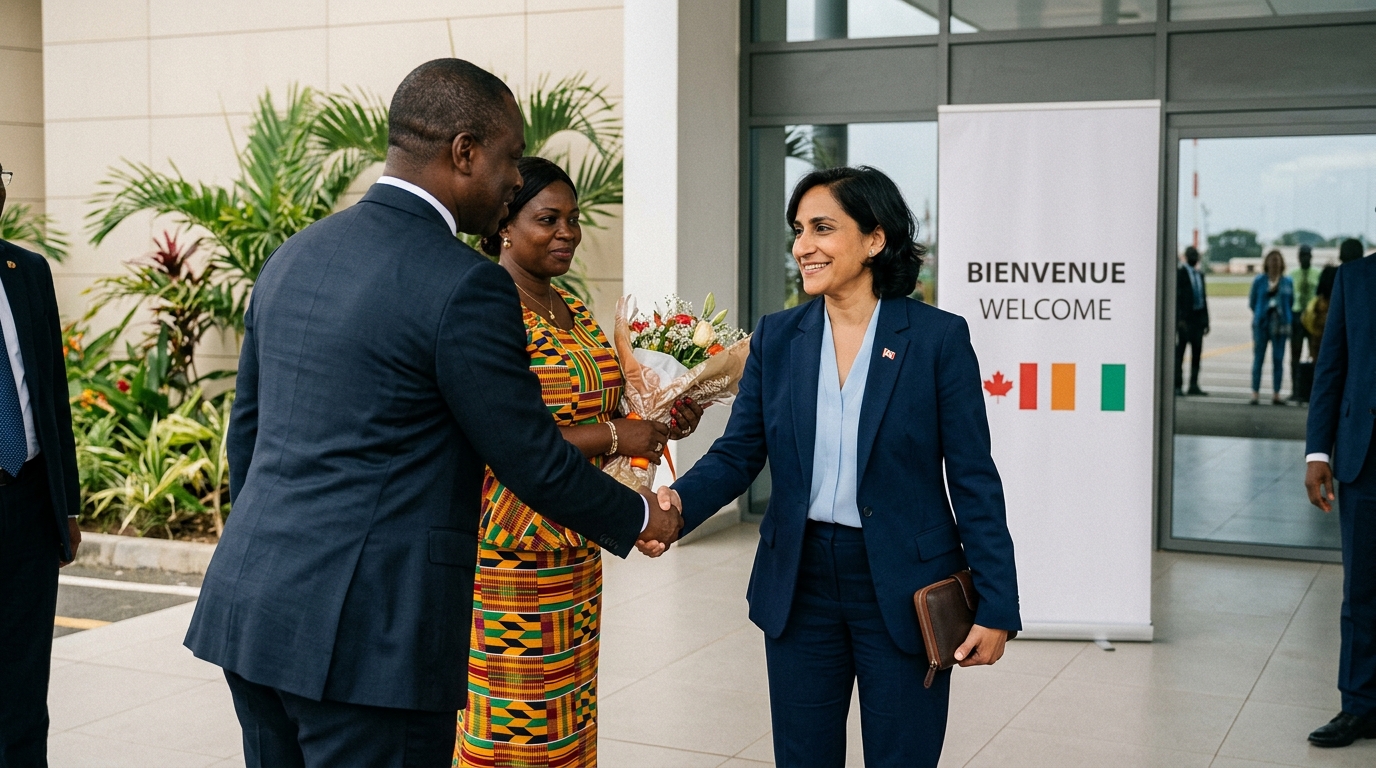
In a move that signals a decisive acceleration of Canada's international strategy, Canadian Minister of Foreign Affairs Anita Anand touched down in West Africa for a high-stakes, multi-nation tour spanning August 4 to 6, 2026. Her destination? Benin and Côte d’Ivoire—two vital anchors of stability, commerce, and democratic governance in a region buffeted by regional security pressures and economic transition.
This is not a routine ceremonial trip. It is a calculated, forward-looking diplomatic maneuver designed to deepen trade, fortify regional security partnerships, and cement a long-term Canadian footprint in one of the most dynamic strategic theatres on the planet. What is driving Ottawa’s renewed focus on the Gulf of Guinea, and what does this diplomatic pivot mean for the future of international cooperation? Let’s dive deep.
[The Reality: Fact-Finding the West African Strategy]
To understand the weight of Minister Anand’s itinerary, we must examine the verified pillars of Canada’s current diplomatic engagement under its overarching Africa Strategy.
The official delegation schedule is tightly packed with high-level bilateral meetings aimed at institutionalizing cooperation across economic, security, and humanitarian vectors:
1. The Benin Engagement: Upgrading Diplomatic Presence
In Cotonou, Minister Anand scheduled formal consultations with senior Beninese leadership, including Minister of Foreign Affairs Corinne Amori Brunet; Minister of Tourism and Foreign Trade Olushegun Adjadi Bakari; and Gildas Agonkan, Minister Delegate to the President.
- The Upgrade Factor: In a concrete sign of deepening ties, Canada announced that its existing diplomatic office in Cotonou—historically managed through the Embassy of Canada to Burkina Faso—will be upgraded to a full embassy.
- Development and Security: Canada’s bilateral footprint in Benin is substantial, anchored by more than $49.2 million in recent development assistance focusing on gender equality, microfinance, youth employability, and climate-resilient agriculture. Furthermore, both nations are closely aligned on countering regional instability spilling over from the central Sahel into the Gulf of Guinea.
2. The Côte d’Ivoire Anchor: Economic Powerhouse and Security Partner
Moving to Abidjan, Minister Anand’s talks target one of Francophone Africa’s premier economic engines. High-level engagements include meetings with Vice Prime Minister and Minister of Defence Téné Birahima Ouattara, Minister of State and Foreign Affairs Nialé Kaba, and Minister of National Education N’Guessan Koffi.
- Commercial Synergy: Côte d’Ivoire represents a primary commercial hub for Canadian enterprises. Canadian firms maintain active, multi-million-dollar stakes spanning mining, clean energy, infrastructure, agriculture, and digital technology.
- Multilateral Alignment: Beyond trade, the discussions heavily feature joint commitments within La Francophonie, peacebuilding operations, and technical education frameworks designed to harness West Africa's booming youth demographic.
| Country | Key Ministerial Counterparts | Core Focus Areas & Milestones |
| Benin | Corinne Amori Brunet, Olushegun Adjadi Bakari, Gildas Agonkan | Office upgrade to a full Embassy; Sahel security resilience; microfinance and climate-smart agriculture. |
| Côte d’Ivoire | Téné Birahima Ouattara, Nialé Kaba, N'Guessan Koffi | Strategic economic partnership; mining and clean energy trade; vocational education and regional stability. |
[The Horizon: Scenarios, Probabilities, and "What's Next?"]
As Minister Anand meets with private sector leaders and state officials across Cotonou and Abidjan, international analysts and trade economists are looking ahead to the long-term implications of Canada's West African pivot.
While the official agenda centers on verified diplomatic milestones, market observers and geopolitical strategists are actively modeling three major trend-driven scenarios for how this partnership could evolve over the next decade:
Scenario A: The Comprehensive "Resource & Tech Corridor" (Best-Case)
- The Scenario: The upgraded diplomatic mission in Benin and robust commercial engagement in Côte d’Ivoire catalyze a massive influx of Canadian private-sector investment in clean technology, critical mineral extraction, and digital infrastructure. Bilateral trade agreements deepen under the umbrella of African Continental Free Trade Area (AfCFTA) frameworks.
- Market Sentiment: Industry analysts suggest this could position Canadian firms as preferred partners in West Africa's green energy transition, driving mutual economic growth and diversifying Canada’s global trade portfolio away from traditional over-reliance on North American markets.
- Probability: Moderate to High, heavily dependent on continued regional stability and local regulatory streamlining.
Scenario B: The Security-First Stabilization Model (Trend-Driven)
- The Scenario: Due to persistent security spillovers from the Sahel into coastal West African states like Benin, diplomatic and financial resources are increasingly diverted toward defense cooperation, intelligence sharing, and counter-terrorism resilience.
- Market Sentiment: While commercial investments proceed cautiously, the primary focus remains on bolstering border security, maritime domain awareness in the Gulf of Guinea, and humanitarian stabilization.
- Probability: High, reflecting the immediate security imperatives facing coastal West African nations.
Scenario C: The Stalled Diplomatic Footprint (Worst-Case)
- The Scenario: Escalating regional conflicts, macroeconomic headwinds, or domestic political shifts in participating nations slow down the execution of newly minted trade pacts and embassy upgrades, leaving bilateral ties largely symbolic.
- Market Sentiment: Private investors adopt a wait-and-see approach, limiting capital deployment to established mining sectors while broader economic diversification stalls.
- Probability: Low to Moderate, mitigated by the long-term institutional commitments already codified under Canada's Africa Strategy.
[The Takeaway]
Minister Anita Anand’s diplomatic mission to Benin and Côte d’Ivoire is more than a routine international trip; it is a clear indicator of how middle powers must navigate a multipolar world. By pairing traditional development assistance and security cooperation with aggressive commercial diplomacy and institutional upgrades—such as Cotonou's new full embassy status—Ottawa is laying the groundwork for enduring partnerships across the Atlantic.
For readers, investors, and global affairs observers, several key variables will dictate the success of this strategic pivot over the coming months:
- Private Sector Uptake: Watch for follow-up announcements from Canadian trade missions and private firms entering the Ivorian energy and mining sectors.
- Security Metrics in the Gulf of Guinea: Monitor stability indexes along the coastal corridors of Benin as Canadian-backed resilience programs take root.
- Multilateral Engagement: Look for joint initiatives emerging from shared platforms like La Francophonie addressing sustainable development and educational reform.
The architecture of twenty-first-century foreign policy is built on agility, targeted economic engagement, and mutual respect. West Africa is stepping into its economic power—and Canada is ensuring it has a seat at the table.