Category: Global politics || Posted Aug 05, 2026
Trump Says Hormuz Will Be Open Very Soon Threatens to Hit Iran Really Hard If It Backs Out
The 48-Hour Brinkmanship: Trump Ultimatum, Secret Muscat Talks, and the High-Stakes Battle for the Strait of Hormuz
The global energy supply chain is hovering on a razor’s edge. In the narrow, turquoise waters of the Strait of Hormuz—where nearly 20 percent of the world’s petroleum transits every day—a quiet diplomatic gamble is competing against the threat of massive escalation.
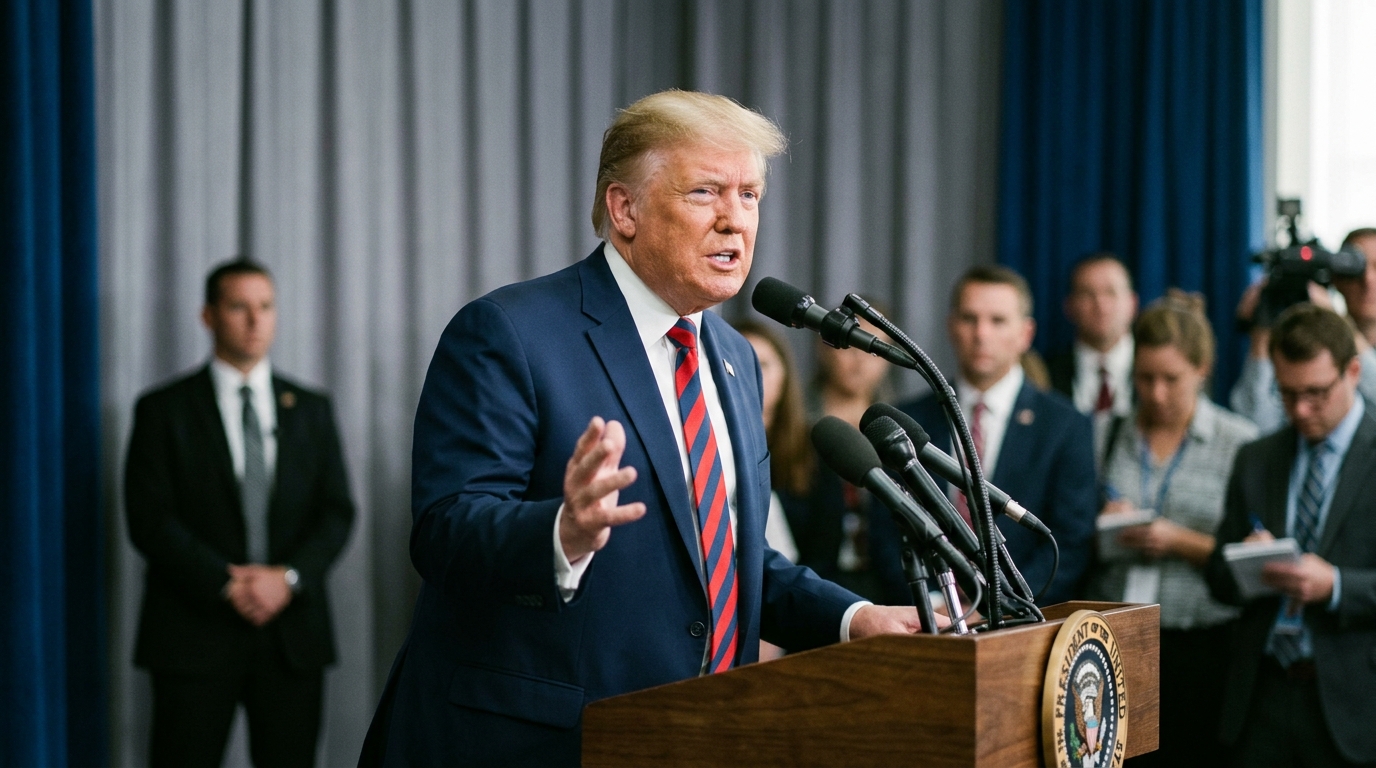
Speaking from Air Force One and in a high-profile interview with Fox News, U.S. President Donald Trump issued an ultimatum that reverberated across global financial markets. The strategic choke point, currently paralyzed by regional hostilities and naval blockades, will be reopened "very soon" under a mediated framework—or Iran will face a military campaign "really hard," far surpassing previous U.S. strikes.
According to President Trump, U.S. Central Command (CENTCOM) was actively preparing a massive military operation—which he characterized as "the biggest since World War II"—when diplomatic representatives from Tehran requested an immediate pause to negotiate terms.
Now, with a 48-hour deadline hanging over the Persian Gulf, the world watches as Washington, Tehran, and the Sultanate of Oman attempt to finalize an interim maritime agreement. Will this delicate diplomacy restore global oil flows, or is the international community on the precipice of an unprecedented regional conflict?
The Verified Record: How Diplomacy Collapsed and Resumed
To understand the volatile nature of the current stand-off, one must look at the timeline of broken agreements and tactical escalations that brought the maritime corridor to a halt.
On June 17, 2026, Washington and Tehran initially established a tentative 14-point Memorandum of Understanding (MoU) designed to de-escalate maritime friction and protect commercial shipping lanes. However, that fragile truce unraveled just 21 days later. CENTCOM confirmed that Iranian forces had launched a strike against a Cyprus-flagged commercial vessel navigating the Strait of Hormuz. In response, Tehran shut down the waterway, deploying anti-ship missile batteries, fast-attack gunboats, and maritime naval mines along the median transit lanes.
The economic shockwaves were immediate. Global crude benchmark prices surged, marine insurance surcharges skyrocketed by over 400 percent, and major shipping syndicates rerouted supertankers around the Cape of Good Hope, adding 10 to 14 days to global transit schedules.
Inside the Draft 60-Day Interim Agreement
Regional intelligence sources and U.S. officials report that indirect talks mediated by Omani diplomats in Muscat have yielded a structured 60-day interim maritime framework.
Under the terms of the draft agreement currently being evaluated by leadership in Washington and Tehran:
| Agreement Clause | Proposed Operational Framework | Technical & Political Conditions |
| Inbound Shipping Lane | Ships entering the Persian Gulf will transit via a northern corridor through Iranian territorial waters. | Managed under Iranian maritime traffic control without transit tolls or fees. |
| Outbound Shipping Lane | Vessels exiting toward the Arabian Sea will transit via a southern corridor through Omani territorial waters. | Coordinated jointly between Omani naval authorities and Iranian maritime monitoring. |
| Mine Countermeasures | Joint 30-day de-mining window to clear sea mines deployed along the central international shipping channel. | Neutral maritime teams to sweep and verify safety before reopening the median lane permanently. |
| Verification & Ceasefire | Mutual 60-day freeze on hostile naval actions, drone interdictions, and air strikes. | Subject to extension if broader negotiations regarding nuclear enrichment proceed constructively. |
While Iranian Foreign Minister Abbas Araghchi agreed in principle to the arrangement, final implementation hinges on formal authorization from Iran’s Supreme Leader, Mojtaba Khamenei, and the Supreme National Security Council. Reports indicate that internal reviews within Tehran were finalized on Tuesday, bringing the agreement closer to a potential announcement.
However, President Trump’s warning leaves zero margin for error: "If they back out again, they're going to get hit really hard. They know that. They understand that I have no choice. They can't have a nuclear weapon. It's very simple."
Hype, Scenarios, and Strategic Probabilities
As diplomatic cables zip between Muscat, Washington, and Tehran, energy markets and geopolitical analysts are actively modeling three potential forward-looking scenarios.
While no outcome is guaranteed, examining these probabilistic paths illuminates the profound stakes involved for global supply chains, national security, and international commodity markets.
Scenario A: The Muscat Breakthrough (Estimated Probability: ~50%)
In this potential best-case scenario, Tehran formally ratifies the 60-day interim agreement, and a joint public announcement is made by Washington, Muscat, and Tehran.
- Potential Operational Execution: Naval mines are cleared within the 30-day target window, allowing commercial oil tankers to resume transit through structured Omani and Iranian corridors.
- Market Sentiment Impact: Analysts anticipate that Brent Crude risk premiums could immediately deflate by $12 to $18 per barrel as supply disruption fears recede. Maritime insurance rates would likely begin normalizing within two weeks.
- Geopolitical Outlook: Reopening Hormuz could pave the way for broader diplomatic engagement regarding nuclear safeguards, ballistic missile limits, and regional proxy containment.
Scenario B: Negotiating Collapse & "The Big Hit" (Estimated Probability: ~30%)
If hardline factions within Tehran reject the interim constraints, or if a surprise tactical incident triggers a breach before ratification, the situation could swiftly devolve into open military confrontation.
- Potential U.S. Military Actions: Based on presidential statements, CENTCOM could execute high-intensity strikes targeting Iranian coastal radar networks, anti-ship missile sites, naval yards, and nuclear research facilities.
- Potential Iranian Counter-Salvos: Iran might retaliate with asymmetric drone and ballistic missile attacks against Gulf energy infrastructure, offshore rigs, and commercial sea lanes across both the Strait of Hormuz and the Bab el-Mandeb strait.
- Market Sentiment Impact: Commodity strategists project that a full-scale kinetic conflict choking the Strait could cause global crude oil prices to surge past historic highs ($140 to $160+ per barrel), potentially triggering global inflationary pressures and energy rationing in dependent markets.
Scenario C: Chronic Fragility & "Grey Zone" Friction (Estimated Probability: ~20%)
A third possibility involves partial implementation—a situation where the interim agreement is signed, but operational compliance remains spotty and fragile.
- Potential Operational Friction: Sporadic mine detonations, mysterious drone harassment, or selective vessel inspections could maintain high tension without triggering a total breakdown into full warfare.
- Structural Economic Shift: Energy importers would accelerate long-term diversification away from Persian Gulf transit lanes. Alternative bypass pipelines—such as Saudi Arabia’s East-West Pipeline (capacity: 7 million barrels per day) and the Abu Dhabi Crude Oil Pipeline to Fujairah—would operate at maximum capacity.
- Market Sentiment Impact: Oil prices would likely settle into a persistent "uncertainty band," trading $15 to $20 above baseline fundamental supply-demand dynamics due to lingering geopolitical risk.
Strategic Scenario Comparison Matrix
| Scenario | Primary Trigger | Projected 30-Day Crude Trend | Shipping Lane Operational Status | Regional Risk Level |
| Scenario A: Muscat Breakthrough | Final sign-off by Supreme National Security Council. | Sharp Correction Downward (-15% to -20%) | Open with dual-lane naval escort. | Moderate / De-escalating |
| Scenario B: Strategic Escalation | Diplomatic breakdown or rogue attack in the Strait. | Unprecedented Spike Upward (+35% to +50%) | Total Lockdown / Combat Zone | Extreme / High Conflict |
| Scenario C: Chronic Fragility | Ambiguous compliance & sporadic harassment. | Oscillating / Elevated Risk Premium | Restricted / High Insurance Overhead | High / Unpredictable |
The ongoing crisis surrounding the Strait of Hormuz illustrates how closely international security and global economic stability are linked. Over the coming days, four pivotal metrics will determine whether the world sees diplomatic resolution or kinetic escalation:
- Tehran's Official Declaration: Formal confirmation from the Iranian Supreme National Security Council regarding the 60-day transit framework.
- CENTCOM Naval Posture: Statements from U.S. Central Command validating the suspension of offensive target packages and verifying de-mining safety protocols.
- Global Energy Benchmark Volatility: Price action across Brent and WTI futures contracts, along with updates from Lloyd’s Joint War Committee regarding maritime war-risk premiums.
- Red Sea Corridor Stability: Monitoring whether allied regional groups (such as Yemen's Houthis) align with any Gulf ceasefire or continue maritime attacks in adjacent waterways.
The next 48 hours will reveal whether diplomacy can secure one of the world's most critical economic passages—or whether the Persian Gulf is headed for a far broader conflict.
Editorial Disclaimer: This article is an investigative analysis and editorial review of international geopolitical and market events based on verified official statements and public reporting. It does not constitute financial, investment, legal, or political advice.