Category: Global politics || Posted Jul 29, 2026
Trump Welcomes Netanyahu to White House as New Iranian Attack Complicates Diplomacy
White House Talks: Trump and Netanyahu Meet Amid Renewed Regional Strains
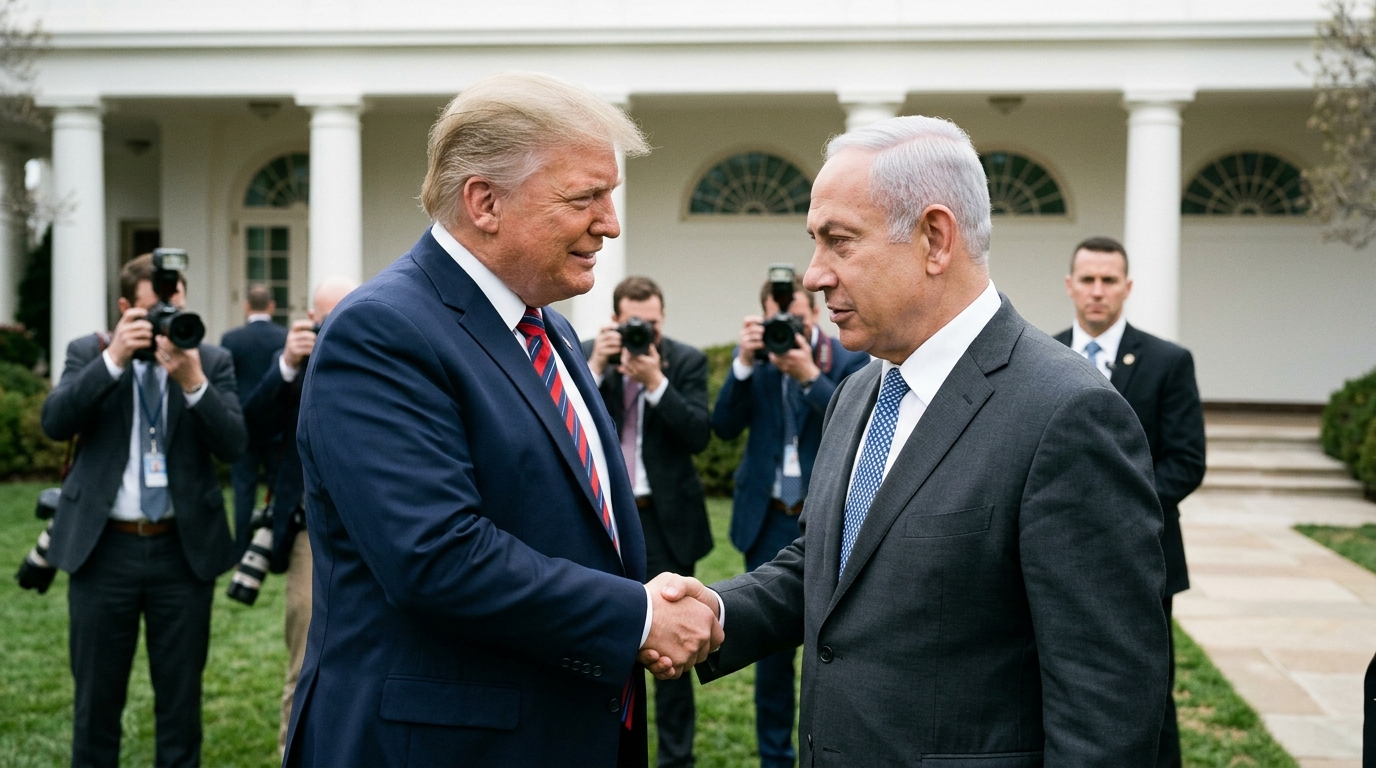
U.S. President Donald Trump and Israeli Prime Minister Benjamin Netanyahu met at the White House for approximately 90 minutes of closed-door discussions. The session marked the first in-person meeting between the two leaders since the outbreak of the Iran conflict, occurring against a backdrop of ongoing diplomatic efforts and renewed regional military activity.
Key Takeaways
- Oval Office Discussions: President Trump and Prime Minister Netanyahu held a 90-minute closed-door meeting at the White House, which White House Press Secretary Karoline Leavitt characterized as "positive and productive".
- Shared Objectives: Netanyahu described the conversation in a public statement as reflecting a "common goal: ensuring that Iran does not obtain nuclear weapons".
- Renewed Missile Activity: The day of the meeting was punctuated by military developments, as the U.S. military reported intercepting multiple ballistic missiles launched by the Islamic Revolutionary Guard Corps (IRGC) at U.S. forces in the region.
- Broader Diplomatic Agenda: Alongside discussions regarding Iran, the leaders addressed regional diplomacy, including the implementation of framework agreements involving Lebanon and efforts to expand the Abraham Accords.
The White House Meeting and Official Positions
The high-level talks brought together key members of the U.S. administration and the visiting Israeli delegation to coordinate policy positions. Ahead of the visit, public commentary from U.S. officials touched on managing tactical differences regarding the ongoing conflict and nuclear file monitoring.
Following the session, Netanyahu characterized the dialogue as an "excellent" exchange reflecting close coordination, noting the participation of Trump's senior national security team. According to an official briefed on the private talks, the discussions included assurances regarding mutual defense while acknowledging the distinct operational timelines and considerations of both nations.
Regional Developments and Security Context
The diplomatic engagement coincided with renewed kinetic activity in the Middle East. After a brief three-day lull that followed nearly two weeks of intensive U.S. airstrikes and retaliatory regional salvos, the U.S. Central Command (CENTCOM) reported that the IRGC launched multiple ballistic missiles in an attempted strike targeting U.S. positions.
According to CENTCOM, all incoming projectiles were successfully intercepted, and there were no immediate alterations reported to the broader diplomatic framework currently being mediated through regional channels.