Category: Opinion & Analysis || Posted Jul 29, 2026
Why the Resumption of Mideast Tensions Threatens Global Energy Security and Inflation Trajectories – Analysis
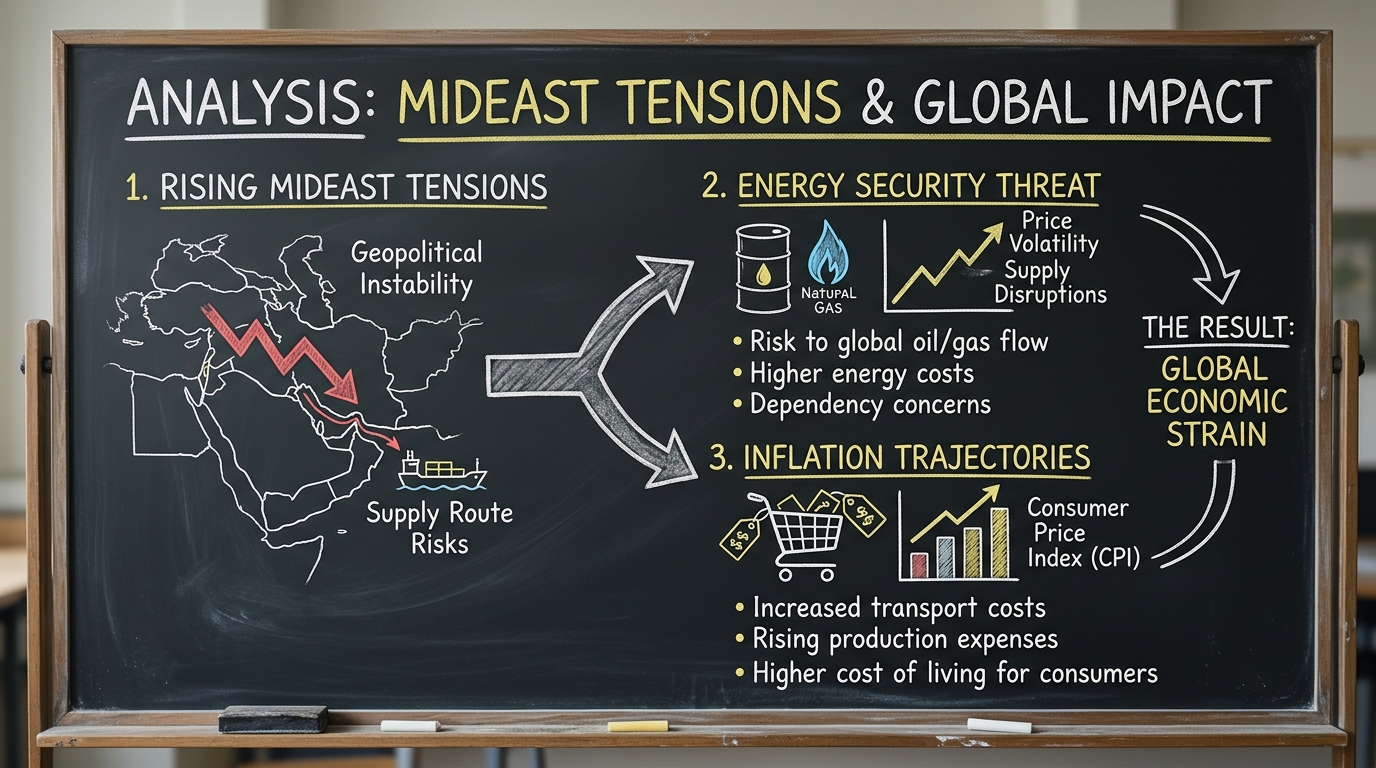
The renewed escalation of geopolitical conflicts in the Middle East has re-established energy supply security as a central concern for global economic stability. Because the Persian Gulf remains a vital choke point for global crude oil and liquefied natural gas (LNG) flows, physical supply disruptions and heightened geopolitical risk premiums directly affect global benchmark energy prices, transportation costs, and macro-level inflation trajectories.
Key Takeaways
- Chokepoint Vulnerability: The Strait of Hormuz handles roughly 20% of the world’s petroleum consumption and a major share of global LNG exports, making transit security essential to global market balance.
- Upstream Price Volatility: Geopolitical tension leads to rapid risk premiums in benchmark crudes like Brent and West Texas Intermediate (WTI), directly raising feedstock costs for refiners.
- Inflationary Transmission: Higher primary energy prices filter downstream into transportation freight rates, agricultural inputs, industrial manufacturing surcharges, and consumer price indices.
- Central Bank Dilemma: Elevated energy prices elevate headline inflation, creating upward pressure on core inflation expectations and delaying planned monetary policy easing cycles.
Strategic Vulnerabilities in Maritime Transit and Supply
The Middle East accounts for a substantial proportion of global crude oil production and maritime energy transport. The primary operational vulnerability centers on narrow maritime passages, particularly the Strait of Hormuz:
- Volume Concentration: According to data from the International Energy Agency (IEA), regional export flows through the Persian Gulf supply approximately 75% of crude oil imports and 59% of LNG imports bound for Asian markets, while also supplying critical refined fuel and gas to Europe.
- Infrastructure Exposure: Strategic energy infrastructure—including offshore production platforms, coastal processing terminals, and export refineries—remains vulnerable to military actions, drone activity, and naval blockades.
- Insurance and Logistics Premiums: Security threats in maritime corridors trigger sharp increases in War Risk insurance rates for commercial vessels. Higher freight rates and diverted shipping routes (such as rerouting around the Cape of Good Hope) add transit time and operational costs across global supply chains.
The Inflation Transmission Mechanism
When regional tensions escalate, the resulting energy price shocks transmit through multiple economic channels:
| Channel | Operational Impact | Economic Outcome |
| Direct Fuel Costs | Surges in retail gasoline and diesel prices | Immediate rise in headline consumer price inflation. |
| Freight & Logistics | Higher bunker fuel prices and maritime insurance premiums | Increased landed costs for imported goods and raw materials. |
| Industrial Feedstocks | Escalating natural gas and naphtha input costs | Higher production overheads for chemicals, plastics, and fertilizer. |
| Second-Order Effects | Businesses pass cumulative input increases to consumers | Broader upward pressure on core inflation measures. |
Economic analysis by the International Monetary Fund (IMF) and the European Central Bank (ECB) indicates that sustained energy price shocks slow real GDP growth while lifting inflation rates across major import-dependent economies.
Policy and Central Bank Ramifications
Persistent geopolitical instability in the Middle East complicates central bank mandates globally:
- Monetary Policy Stance: Central banks face trade-offs between supporting growth and curbing inflation. While energy-driven inflation reduces consumer purchasing power, persistent cost shocks limit central banks' flexibility to lower interest rates without risking embedded inflation expectations.
- Fiscal Spending Pressures: Governments in energy-dependent nations face renewed pressure to consider fuel subsidies, tax adjustments, or strategic reserve releases to cushion consumers, impacting fiscal balances.
- Energy Transition Imperatives: Market volatility underscores the strategic balance between short-term fossil fuel security measures and long-term domestic renewable energy deployment to reduce import exposure.