Category: Opinion & Analysis || Posted Jul 24, 2026
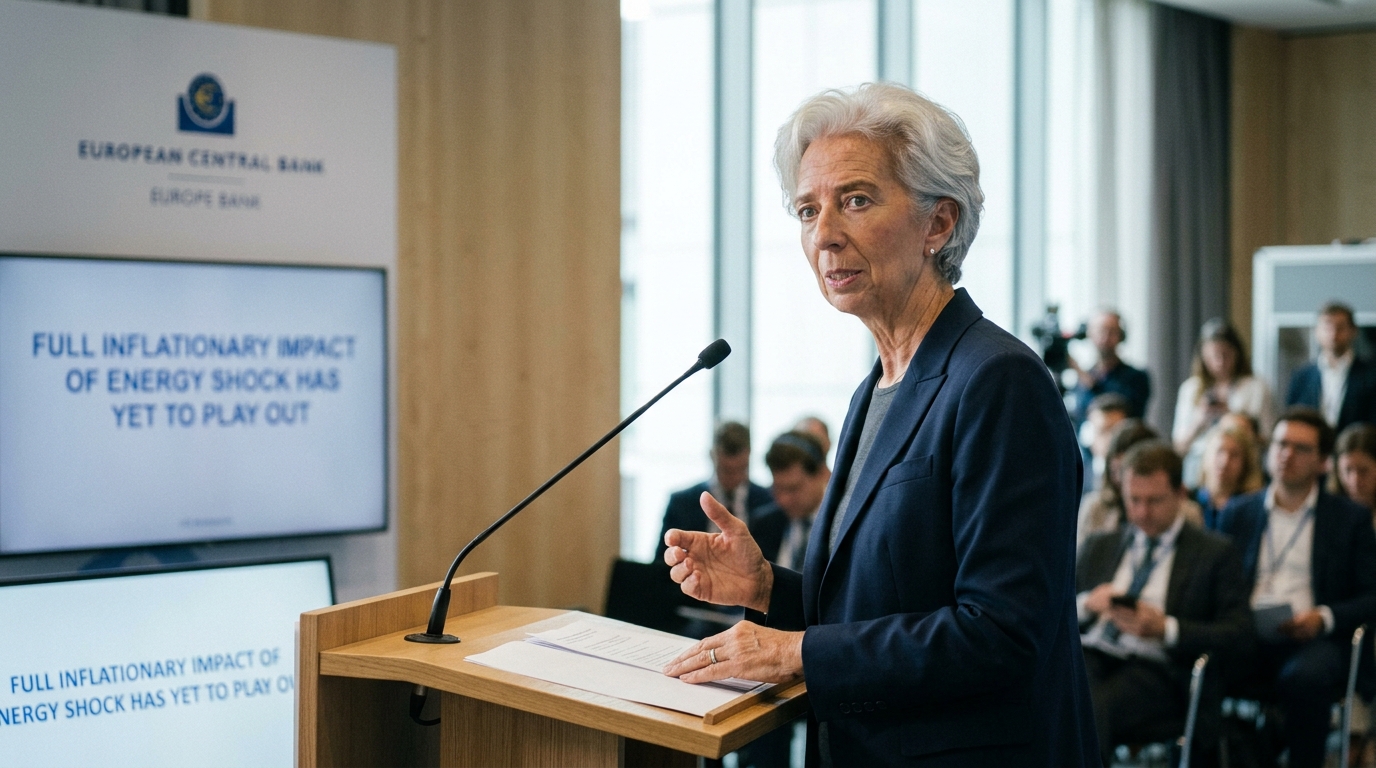
Full Inflationary Impact of Energy Shock Has Yet to Play Out, ECB's Lagarde Warns
The Lag in the Energy Shock: Why Christine Lagarde Is Warning That Eurozone Inflation Isn't Done Yet
While headline Eurozone inflation eased to 2.8% in June, European Central Bank (ECB) President Christine Lagarde delivered a clear reality check during the Governing Council's monetary policy press conference. Holding the benchmark deposit facility rate steady at 2.25%, Lagarde cautioned that the full economic impact of recent energy market volatility has yet to make its way through the system.
"Uncertainty remains high and the full inflationary impact of the energy shock has yet to play out."
— Christine Lagarde, ECB President
Here is a breakdown of why the ECB is taking a cautious "wait-and-see" approach and what the delayed energy transmission mechanism means for the Eurozone economy over the second half of the year.
1. First-Round vs. Second-Round Inflation Effects
When crude oil benchmarks fluctuate near $100 a barrel—driven by geopolitical tensions in the Middle East and maritime logistics disruptions—consumers feel the initial impact almost immediately at gas stations and in utility bills. This immediate spike is known as the first-round effect.
The central bank's primary concern, however, revolves around the slower, indirect second-round effects:
- Freight & Agricultural Pass-Through: Higher fuel costs take 3 to 9 months to fully work through supply chains into grocery prices, freight rates, and manufactured goods.
- Wage-Price Pressure: Extended periods of high living costs encourage workers to seek wage adjustments, which can prompt businesses to raise end-consumer prices to preserve operating margins.
- Embedded Expectations: If businesses begin pricing in permanently higher energy overheads, core inflation stays sticky long after commodity prices stabilize.
2. A Volatile Energy Landscape
The ECB's rate pause reflects an environment where energy prices remain volatile and elevated relative to pre-conflict baselines. Regional shipping bottlenecks in the Red Sea and heightened risks surrounding oil transport hubs have kept energy markets on edge.
| Indicator | Current Status | Eurozone Target / Baseline |
| ECB Deposit Rate | 2.25% (Unchanged in July) | Data-dependent meeting-by-meeting stance |
| Eurozone Inflation (June) | 2.8% | 2.0% Medium-term target |
| Projected Inflation Peak | ~3.4% (Forecasted for H2 2026) | Expected to remain above 3% into early 2027 |
| Brent Crude Benchmark | ~$98 – $100 / barrel | Above pre-conflict levels |
Under staff projections, headline inflation could temporarily pick up toward 3.4% in the third and fourth quarters before steadily moderating back toward the 2% target.
3. The ECB's Monetary Balancing Act
By holding interest rates constant, the ECB buys time to assess incoming data ahead of its key policy meeting on September 10.
This creates a tight rope for monetary policy:
- Over-tightening Risk: Raising interest rates further to suppress an energy-driven cost shock risks stalling already modest GDP growth and triggering stagflation.
- Premature Easing Risk: Cutting rates too early could allow second-round energy costs to entrench themselves across core service sectors.
Lagarde also called on Eurozone member states to ensure that any fiscal support or energy relief measures provided to households remain temporary, targeted, and tailored, avoiding unintended stimulus that could complicate inflation control.
The Takeaway
While the initial drop in headline inflation brought welcome news earlier this summer, energy shocks operate on a delay. As long as supply-side uncertainty persists, central banks will remain wary of declaring victory over inflation prematurely.