Category: Security & Regulation || Posted Jul 17, 2026
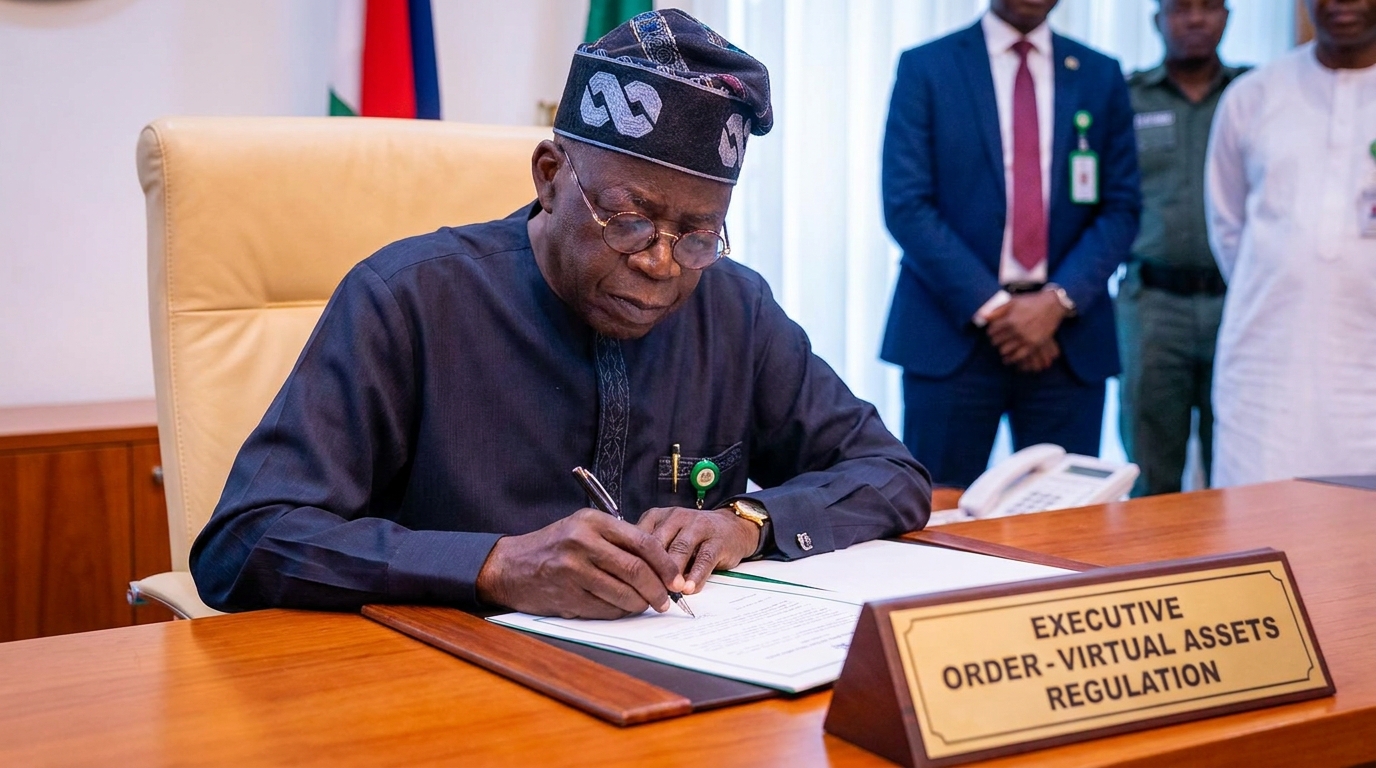
President Tinubu Signs Executive Order to Unify Nigeria’s Virtual Assets Regulation
Nigeria’s relationship with digital assets has been a rollercoaster. From the Central Bank's hardline banking ban in 2021 to the recent introduction of the Securities and Exchange Commission’s (SEC) incubation programmes, local Web3 startups and retail traders have long been forced to navigate a dizzying maze of conflicting rules.
But the era of regulators operating in isolated silos is officially over.
In a massive, historic policy shift, President Bola Ahmed Tinubu has officially signed the Presidential Executive Order on Virtual Assets Coordination, 2026. Taking immediate effect, this landmark directive establishes a unified, inter-agency framework engineered to completely eliminate regulatory overlaps, crush fraudulent bad actors, and provide much-needed structural certainty to Africa's largest cryptocurrency market.
1. Bridging the Silos: The New Virtual Asset Council
For too long, the boundaries between what constitutes a currency, a commodity, or a security have blurred. Because different agencies stepped in to regulate different corners of the crypto space independently, massive gaps emerged—loopholes that left Nigerian investors exposed to sophisticated scams and cost families their hard-earned savings.
Rather than adding bureaucratic friction by birthing a brand-new government agency, the Executive Order establishes a hyper-coordinated Virtual Asset Council. This central council acts as a unified command center, bringing Nigeria's heavy-hitting financial and security institutions directly to the same table:
- The Chairmanship: The Central Bank of Nigeria (CBN) formally chairs the council, steering monetary policy and overall systemic stability.
- The Vice-Chairs: The Securities and Exchange Commission (SEC) and the newly reformed Nigeria Revenue Service (NRS) step in as co-vice chairs.
- The Security Perimeter: The inner circle is rounded out by the Nigerian Financial Intelligence Unit (NFIU) and the Office of the National Security Adviser (ONSA), ensuring absolute alignment on national security and anti-money laundering protocols.
The daily operations will be managed by a dedicated Virtual Asset Office based directly out of the CBN. Using an integrated supervisory technology platform, all participating agencies will gain shared visibility into market data while strictly retaining independent control over their respective data pools.
2. Who Regulates What? The Lines are Drawn
The golden rule of this new executive order is that registration follows the true nature of the asset activity. To give operators absolute peace of mind, the Presidency has explicitly demarcated jurisdictional boundaries:
Securities and Tokens $\rightarrow$ SEC
If a virtual asset is structured as an investment contract, an equity token, or a digital commodity, it remains firmly under the watchful eye of the SEC. This complements the SEC's current momentum, following their recent onboarding of digital asset exchanges into incubation registries.
Payments, Custody, and Settlement $\rightarrow$ CBN
If a platform deals primarily in stablecoin payments, digital wallets, non-security asset custody, or fiat-to-crypto off-ramps, it will register directly through the CBN's frameworks.
The Tie-Breaker Rule: In rare cases where an emerging asset’s characteristics overlap, the newly formed Virtual Asset Council holds the ultimate statutory power to review the case and assign a definitive regulatory home.
3. Sandboxes and Tax Policies: What Happens Next?
The administration has made it clear that this order is not an aggressive crackdown designed to stifle growth, but an effort to foster "responsible innovation". To prove this, the Executive Order triggers three immediate, major milestones for the Nigerian tech ecosystem:
- The CBN Regulatory Sandbox: The Central Bank will officially launch an elastic, controlled sandbox environment. This allows eligible Web3 startups and blockchain developers to safely test their software, payment rails, and tokenized products under real-world conditions before full market deployment.
- A Dedicated Crypto Tax Policy: The Nigeria Revenue Service (NRS) is slated to release a comprehensive tax policy explicitly tailored to the virtual assets industry. This will provide clear, unambiguous rules on how digital asset transactions fit into existing tax laws, boosting voluntary corporate compliance.
- The National White Paper: The Federal Government has announced that it is finalising a long-term Virtual Assets White Paper. This master document will serve as the official, multi-year national roadmap for Web3 integration across Nigeria.
The Bottom Line
President Tinubu’s directive represents a major maturity milestone for the Nigerian digital economy. By forcing competing regulatory agencies to abandon turf wars and operate under a unified framework, the government has sent a clear message to international investors and local founders alike: Nigeria is open for Web3 business, provided you play by the rules.
The Virtual Asset Council has been given an unyielding 30-day deadline to submit its finalized Harmonised Implementation Framework. For local startups who have spent years walking a regulatory tightrope, the next month promises to finally deliver the clear, unambiguous rules of the road they’ve been waiting for.
Do you believe that a CBN-led Virtual Asset Council will successfully streamline crypto operations in Nigeria, or will inter-agency bottlenecks still slow down local Web3 startups? Share your thoughts in the comments below!