Category: Global politics || Posted Jul 09, 2026
The Post-Ankara Reality Check: Cash-Strapped European Nations Face Immediate Fiscal Friction as Domestic Budgets Scramble to Enforce NATO's Aggressive 5% GDP Defense Mandate
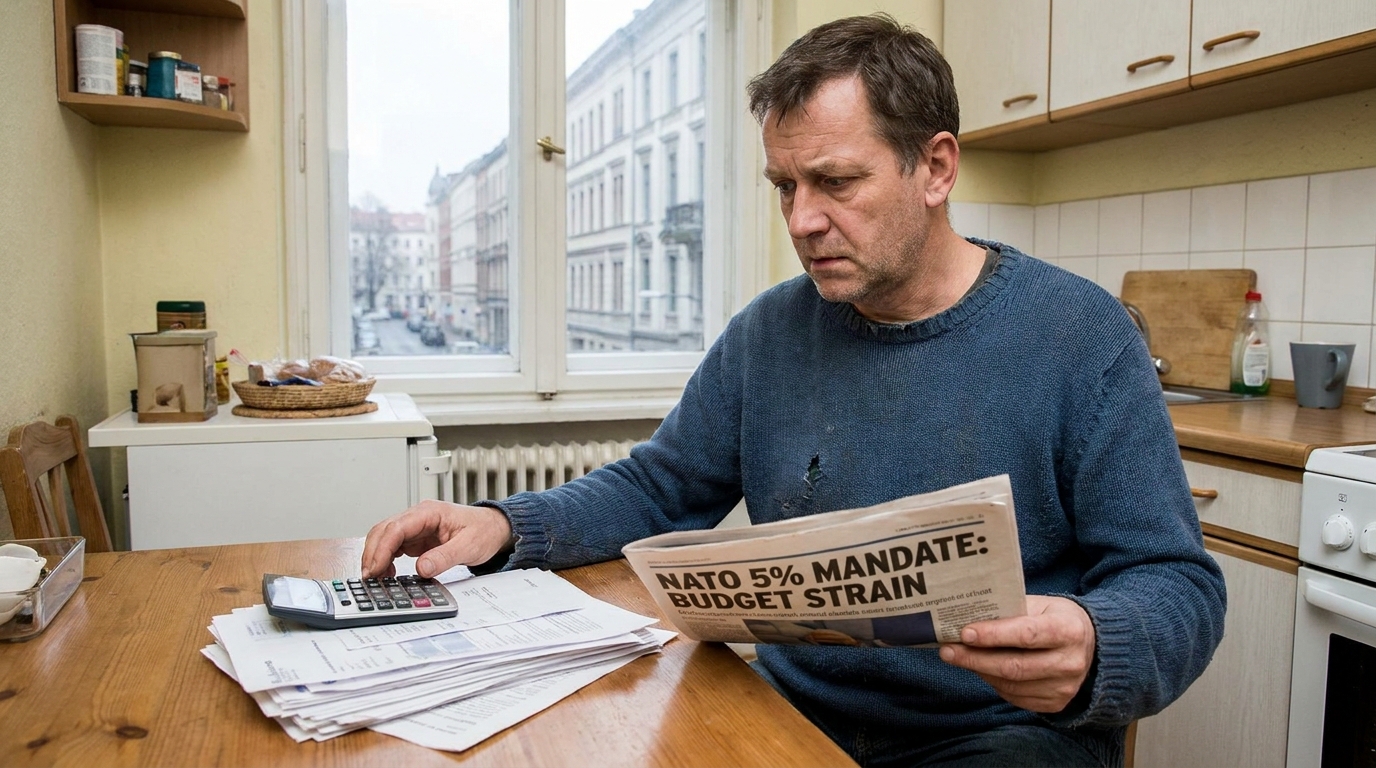
The celebratory atmosphere at the Presidential Complex in Ankara has vanished, replaced by an acute sense of anxiety inside Europe's ministries of finance. With the ink barely dry on the "Ankara Consensus" and its aggressive 5% GDP defense spending mandate, cash-strapped European nations are facing an immediate and severe fiscal reality check. The structural shift to a self-sufficient "NATO 3.0"—accelerated by Washington’s steady strategic pivot away from the continent—has sparked intense domestic friction as governments scramble to rewrite their national budgets.
The Brutal Algebra of "Guns vs. Butter"
For over a decade, European allies viewed the old 2% GDP defense floor as a difficult target. Elevating that target to a 5% mandate by 2035 has shattered long-standing political consensus across Western and Southern Europe. Financing this commitment requires deeply unpopular choices at a time of elevated public debt and mounting spending pressures from aging populations.
"Spending more on defence means spending less on other priorities," NATO Secretary General Mark Rutte recently cautioned. He explicitly acknowledged that money may need to be systematically diverted from pensions, healthcare, and social security systems to meet military demands.
The fiscal friction has exposed a massive geographical fault line across the alliance:
- The Frontline Spenders: A proactive eastern bloc is already pacing the alliance. Lithuania leads the surge with core defense expenditure projected at 5.33% of GDP, followed closely by Estonia at 5.10%, Latvia at 4.92%, and Poland at 4.68%. For these nations, the spending is treated as an existential necessity.
- The Debt-Strapped Western Tier: Countries like France (2.22%), Italy (2.10%), and Spain (2.10%) face a much steeper climb. With national debt already hovering near or exceeding 100% of GDP in several Mediterranean economies, these governments lack the fiscal headroom to absorb sudden, multi-billion-euro military expansions without triggering severe economic or political instability at home.
The 3.5% + 1.5% Accounting Battleground
To make the medicine more palatable, the Ankara framework splits the 5% mandate into two categories: 3.5% for core military capabilities (troops, weapons, and ammunition) and up to 1.5% for broader security and civil resilience.
This division has turned national balance sheets into creative accounting battlegrounds. Capital cities are rushing to reclassify existing civilian infrastructure projects to count toward the 1.5% resilience quota. The Netherlands, for instance, is actively working to loop cybersecurity upgrades, cross-border rail logistics, and dual-use port infrastructure into its defense portfolio. While this helps on paper, hawkish allies argue that padding the ledger with civilian infrastructure does nothing to address severe battlefield deficits, such as Europe's critical shortage of long-range air defense systems and heavy artillery stockpiles.
The Import Leakage Trap
A major economic critique of Europe’s rapid militarization is that higher defense spending will not automatically yield a domestic growth dividend. Sovereign credit analysts warn that a significant portion of this newly allocated cash will immediately "leak" out of the European economy through imports of high-tech American military hardware, limiting the domestic industrial multiplier effect.
Without unified, EU-wide defense procurement programs to foster genuine European defense champions, national ministries are reverting to unilateral, off-the-shelf purchases—predominantly from U.S. contractors. Consequently, European taxpayers are facing cuts to social programs to fund investments that ultimately stimulate defense payrolls across the Atlantic, rather than revitalizing factories at home.
As parliaments prepare to debate their upcoming budget cycles, the post-Ankara reality is clear: the alliance may have agreed on a paper framework to defend its borders, but the internal war over who pays the bill has only just begun.