Category: Global politics || Posted Jul 08, 2026
The Ankara Consensus: NATO Leaders Wrap Up Historic Summit in Türkiye Amid Intense Friction Over Enforcing the 5% GDP Defense Spending Mandate
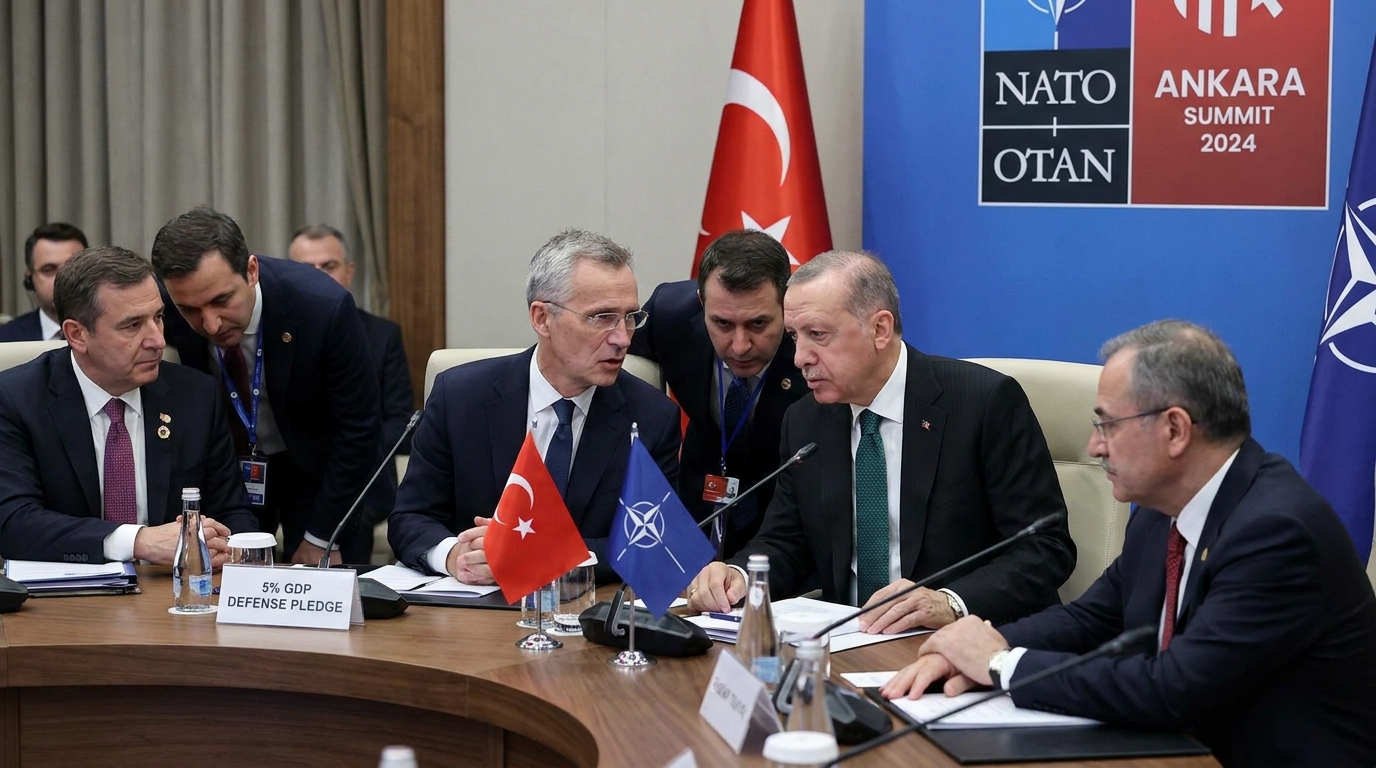
The historic 36th NATO Summit in Ankara has officially drawn to a close, yielding a final joint communiqué known as the Ankara Consensus. While the public family photo at the Presidential Complex projected an image of absolute transatlantic solidarity, the two-day summit on July 7–8, 2026, was defined by some of the most bitter, closed-door shouting matches in the alliance's 77-year history.
At the absolute center of the storm is the enforcement of the historic 5% GDP defense spending mandate by 2035—a radical target established during the 2025 Hague Summit that has pushed the alliance to its structural and political limits.
The Trump Ultimatum and the "NATO 3.0" Reality
The friction in Ankara was heavily driven by U.S. President Donald Trump, who arrived in Turkey determined to formalize a permanent shift in how the alliance operates. Mirroring his administration's transactional approach to international partnerships, the White House has made it clear that American security guarantees are strictly conditional on European allies footing their own bills.
With Washington actively reducing its military footprint on the European continent to focus on its own domestic priorities and navigate the fragile peace track in the Persian Gulf, the burden of funding continental defense has landed squarely on Europe's shoulders.
The Structural Shift: NATO Secretary General Mark Rutte has continuously urged member states to embrace a permanent "wartime mindset" and turbocharge defense production. The Ankara Consensus effectively codifies "NATO 3.0"—a framework designed to transform the alliance into a self-sufficient European coalition capable of independent deterrence.
Creative Accounting vs. Frontline Reality
The implementation of the 5% target has exposed a deep geopolitical fault line between the allies directly bordering Russia and those in Western Europe. Frontline states like Poland—which has aggressively pushed its own spending toward 4.7% of GDP—alongside the Baltic nations, argued fiercely for immediate, binding enforcement mechanisms. They frame the 5% floor as an existential necessity in the fifth year of the war in Ukraine.
However, several Western European capitals are facing massive domestic political backlashes over the sheer fiscal strain of the mandate. The debate turned particularly hostile over the concept of "creative accounting." For example, the Netherlands has attempted to bridge its funding gap by allocating 3.5% of GDP to core military budgets while counting the remaining 1.5% via non-defense infrastructure projects that indirectly benefit military mobility.
Hawkish members openly criticized these measures as "sweet-talking" compliance without building actual combat readiness, while nations like Spain continue to operate under highly scrutinized exemptions.
The Core Deliverables: Ukraine and the Southern Flank
Despite the internal divisions over the ledger books, the alliance managed to lock down several critical security commitments to prevent a systemic collapse of the eastern flank:
- The €70 Billion Ukraine Package: NATO leaders officially pledged €70 billion in military equipment, training, and logistical assistance for Ukraine covering the remainder of 2026, with commitments to maintain parity into 2027. Crucially, in line with Trump’s demands, the entirety of this package will be financed through existing European bilateral commitments and a €60 billion European Union loan facility, with zero financial contribution from the United States.
- The Strategic Southern Pivot: As the host nation, Turkish President Recep Tayyip Erdoğan successfully used his leverage as a pivotal middle power to broaden NATO’s outlook. Turkey secured a commitment to deepen the Istanbul Cooperation Initiative (ICI), expanding defense-industrial partnerships with Gulf states like Qatar, Kuwait, and Bahrain to secure NATO's southern flank amid ongoing volatile regional friction.
- The Maritime Mandate: The final text included a stern warning directed at Tehran, affirming that the alliance considers freedom of navigation through the Strait of Hormuz a red line and demanding that Iran permanently honor its commitments to toll-free international transit.
A Multipolar Turning Point
The conclusion of the Ankara Summit was met with intense domestic security measures on the ground. The Governorship of Ankara enforced an absolute province-wide ban on public assemblies, resulting in pre-emptive anti-terror sweeps and the detention of over 200 anti-NATO activists, journalists, and labor leaders who opposed the drastic inflation of military budgets at the expense of social programs.
Ultimately, the Ankara Consensus will be remembered as the moment NATO formally accepted a fractured, multipolar reality. By forcing European nations to absorb the staggering costs of their own territorial defense while Washington dictates terms from a distance, the summit has fundamentally rewired the transatlantic alliance. Whether Europe can successfully execute this massive 5% militarization plan without triggering economic instability at home remains the defining question for the decade ahead.