Category: Opinion & Analysis || Posted Jul 05, 2026
The Funeral Pause Illusion: Why Washington’s "One Week Off" Gesture to Tehran Signals a Calculated Intermission in Nuclear Diplomacy Rather Than a Permanent De-escalation
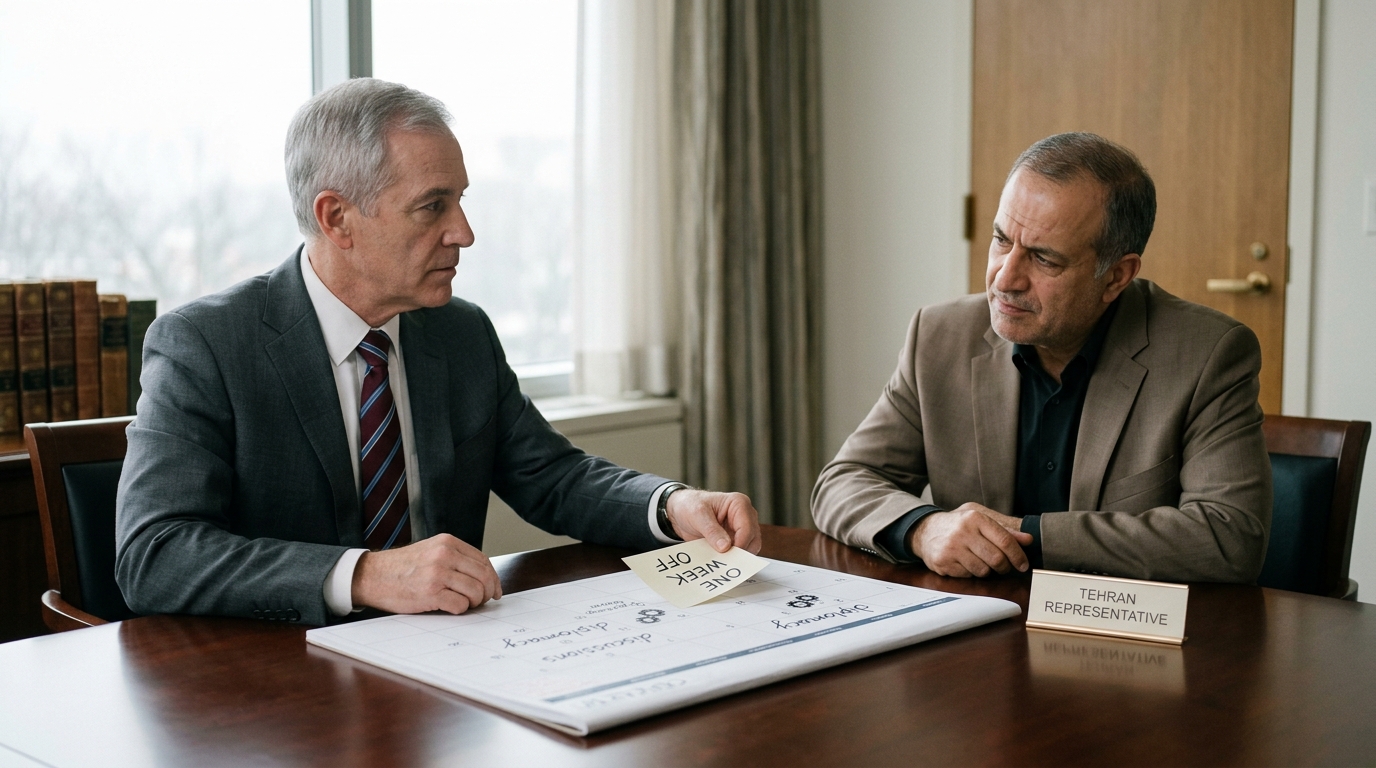
Geopolitical theater rarely provides a more striking contrast than a prime-time Independence Day address juxtaposed against the mass state funeral of a regional adversary. Speaking at Mount Rushmore amid the nation’s 250th anniversary celebrations, President Donald Trump casually recalibrated the timeline of global brinkmanship, declaring that Washington had given Iran “a week off” from intense diplomatic and military pressure to mourn the late Supreme Leader Ayatollah Ali Khamenei.
To the casual observer and short-term market speculator, this public relations gesture looked like an organic olive branch—a moment of humanitarian pause that could pave the way for a sweeping, historic de-escalation in the Middle East. The immediate reaction across global trading desks reflected this optimism, as energy futures experienced a brief cooling period and diplomatic channels in Doha, Qatar, paused their technical sessions with a mutual sigh of relief.
But the narrative of a benevolent, permanent step back from the brink is an illusion. Washington’s calculated intermission is not a structural pivot toward long-term peace. Instead, it represents a cold, tactical pause in a high-stakes campaign of coercive diplomacy. By granting Tehran a temporary window of breathing room during its highly sensitive leadership transition, Washington is executing a precise macro maneuver designed to maximize its leverage before the next, more aggressive phase of nuclear and regional infrastructure negotiations begins.
The Strategic Underpinnings of the Intermission
In the high-stakes arena of modern statecraft, true diplomatic benevolence does not exist. A pause in hostilities or technical talks is fundamentally an exercise in capital preservation and strategic repositioning. Washington’s "one week off" gesture serves three critical operational objectives that have nothing to do with genuine de-escalation.
First, the pause acknowledges the absolute necessity of a functioning negotiating partner. Following the assassination of Khamenei earlier this year, Iran's internal leadership architecture has been thrown into an intense, volatile succession crisis. Washington recognizes that forcing technical agreements while Tehran’s supreme leadership council is paralyzed by internal infighting is an exercise in futility. By allowing the state funeral to proceed without direct military or rhetorical disruption, the U.S. is giving the Islamic Republic exactly enough time to stabilize its command structure so that it can eventually return to the bargaining table to sign an enforceable, long-term nuclear and maritime infrastructure deal.
Second, the intermission provides U.S. and allied intelligence networks with an unprecedented window to observe the domestic power dynamics in Tehran. During a week of massive public gatherings, state funerals, and heightened security protocols, the fault lines within the Islamic Revolutionary Guard Corps (IRGC) and the conservative political establishment become highly visible. Washington is utilizing this quiet week to gather critical data on who is consolidating power, allowing risk models to be updated before the next round of high-pressure talks in Qatar.
The Reality-TV Statecraft Playbook: Coercion Wrapped in Benevolence
The rhetoric surrounding the pause—framed by the administration’s characteristic mix of absolute deterrence and transactional business logic—reveals the true nature of modern reality-tv diplomacy. Proclaiming that the U.S. granted a pause "because we're nice" while simultaneously reminding the world that Washington "knocked the hell out of Iran" is a calculated psychological maneuver.
This dual-track approach is engineered to project overwhelming dominance to a global audience while offering the adversary a facesaving window to yield. For Tehran, the public framing of this pause as a paternalistic favor from Washington is deeply humiliating, yet logistically indispensable. Iran’s leadership must accept the intermission to manage the volatile crowds at the Imam Khomeini Grand Mosalla and secure their domestic infrastructure, even as their state media frames the temporary freeze as a victory of Iranian resistance over a superpower.
By utilizing public declarations to establish the terms and duration of the pause, the U.S. administration effectively controls the diplomatic clock. It signals to regional allies and adversaries alike that Washington retains the sole authority to turn the global pressure valve on or off at whim, ensuring that when the technical talks resume, the baseline expectations will be dictated entirely on American terms.
The Macro Realignment: Preparing for Post-Pause Volatility
For global asset allocators, multinational supply chain directors, and multi-asset corporate treasuries, treating this funeral pause as a permanent resolution to Middle Eastern friction is an operational blind spot. The temporary stabilization of maritime transit through the Strait of Hormuz and the freeze on ballistic counter-strikes are highly conditional short-term trends.
Institutional risk desks are looking past the current week of mourning and aggressively pricing a landscape of prolonged, high-intensity structural friction:
- The Sovereign Infrastructure Premium: Smart money recognizes that the core drivers of global instability—Tehran’s nuclear enrichment capabilities, its asymmetric regional proxy networks, and Western access to vital energy shipping corridors—remain entirely unresolved. As a result, capital is continuously rotating out of vulnerable cross-border assets and flowing into highly defensible, localized technology equity.
- The Energy Chokepoint Re-Pricing: While crude oil benchmarks experienced a temporary drop following the confirmation of the diplomatic intermission, insurance syndicates and long-term commodity traders are maintaining elevated baseline risk premiums. They recognize that the conclusion of the funeral week will instantly reactivate the regional friction points, especially with Israeli Prime Minister Benjamin Netanyahu heading to Washington next week to contest any sweeping concessions to Tehran.
- The Growth of Secure Hardware Allocation: Because international agreements are increasingly treated as fluid, short-term arrangements rather than permanent treaties, corporate treasuries are ditching narrative-dependent digital store-of-value instruments. Capital is flowing heavily into advanced computational infrastructure, automated high-density manufacturing networks, and sovereign-backed clean energy grids that possess the hard physical utility to compound value entirely independent of sudden shifts in foreign policy.
The Allocation Playbook for a Regime of Fluid Diplomacy
When global foreign policy moves from structured, multi-lateral treaties to sudden executive pivots and strategic intermissions, relying on legacy historical correlation models is an existential liability. Protecting your organization's balance sheet requires an un-romanticized commitment to liquidity and operational autonomy.
1. View Diplomatic Halts as Purely Tactical
Stop adjusting your long-term investment or corporate expansion strategies based on daily press briefings, state-level gestures of goodwill, or short-term ceasefires. In the modern era of brinkmanship, public gestures of benevolence are simply tools used to gain tactical positioning. Treat all incoming announcements of diplomatic pauses as noise, keeping your primary analytical focus locked onto real-world, physical metrics like satellite tracking of military assets and localized industrial power consumption.
2. Maximize Capital Commitment to High-Moat Real Equities
Insulate your portfolio from the inevitable post-pause volatility by anchoring capital to sectors that command absolute structural utility. Allocate heavily into mega-cap hardware computing networks, secure sovereign cloud technologies, and advanced aerospace firms. These industries generate predictable, fiat-denominated revenue flows backed by long-term government and institutional budgets, ensuring they can continue to grow and compound wealth even if regional maritime chokepoints face a sudden, multi-week physical or informational freeze.
3. Implement Automated Risk Rebalancing Thresholds
Given that the transition from a diplomatic pause back to active kinetic confrontation can occur overnight with a single statement or automated strike, manual asset management is an operational vulnerability. Risk management teams must deploy automated, rule-based trailing guards and strict allocation triggers. When a narrative-fueled headline creates a temporary, artificial spike or crash in a highly liquid asset class, your systems must automatically capture gains, minimize risk exposure, and reallocate that capital into risk-free sovereign debt or productive technology equity.
The Bottom Line
The mass funeral processions moving through the streets of Tehran are a historic display of political and spiritual continuity, but they should not be misinterpreted as the start of a new, peaceful diplomatic era. The "one week off" granted by Washington is a masterclass in strategic intermission—a brief, calculated cooling of the engines designed to let the dust settle from recent wars, allow a chaotic adversary to stabilize its internal chain of command, and establish the ultimate psychological platform for the U.S. to demand structural concessions.
The global investment landscape must remain clear-eyed. The structural fractures defining the modern geopolitical order cannot be paved over by a temporary memorandum of understanding or a series of bombastic speeches at national monuments. In this era of highly fluid, transactional statecraft, long-term portfolio security cannot be achieved by chasing the fleeting promises of diplomatic pauses. The future belongs exclusively to the disciplined, pragmatic realists who structure their corporate balance sheets to weather the inevitable return of the storm, anchoring their wealth to the unyielding, compounding power of hard technology productivity and real-world asset execution.